
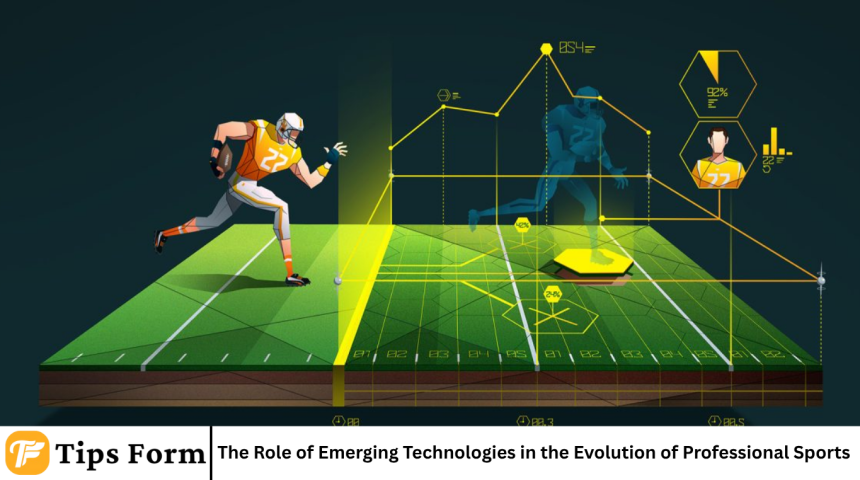
Professional sports have always evolved—boasting new strategies, training methods, and equipment. But nowhere has innovation made a more sweeping impact than in the adoption of emerging technologies. From biometric wearables tracking athletes’ vitals to AI-driven analytics revolutionizing coaching, the technological wave reshaping sports is both powerful and accelerating.
Today’s elite teams and organizations use a convergence of innovations—artificial intelligence (AI), machine learning (ML), data analytics, Internet of Things (IoT) sensors, virtual reality (VR), augmented reality (AR), and 5G—to optimize performance, prevent injuries, engage fans, and even transform how sports are broadcast and consumed.
More Read:TechZone Electronics: Exploring Finance Options and Strategies
Performance Enhancement & Training
Wearables & Biometric Monitoring
Athletes don wearable devices—smart garments, vests, wristbands—equipped with sensors to capture data like heart rate, acceleration, distance, hydration, and body temperature.
- Catapult Sports, a pioneer in athlete-tracking technology, provides GPS and accelerometry devices used widely in football, rugby, and soccer. Teams use the data to monitor workload, running intensity, and potential fatigue.
- WHOOP, worn as a wrist strap, reports sleep quality, recovery metrics, and strain. The data helps athletes fine-tune training and recovery schedules.
Smart and Connected Equipment
- Smart batting helmets in baseball can detect impact force and location, aiding in concussion monitoring.
- Sensor-embedded balls and racquets in tennis and soccer track spin, speed, and trajectory, giving both players and coaches instant feedback on technique.
Simulators, VR & AR for Training
Virtual reality setups simulate game scenarios for quarterbacks, pitchers, goalkeepers, and more.
- NFL quarterbacks train in VR tunnels, reading virtual defenses—a dramatic leap from traditional film study.
- AR overlays during practice can show optimal positioning, ideal passing lanes, heat maps, or tactical overlays in real time.
Benefits:
- Real-time data
- Objective performance and technique metrics
- Reduced injury risk through smarter load management
Injury Prevention & Rehabilitation
Predictive Analytics & Machine Learning
- ML models analyze years of athlete data—biometrics, practice load, historical injuries—to identify patterns and predict injury risk. For example, UPMC Sports Medicine and the Baylor College of Medicine have collaborated in predicting soft-tissue injuries in NFL players.
- Monitoring joint angles, biomechanics, fatigue levels, and stress markers enables preemptive modifications in drills to prevent strain and recurring injuries.
Recovery Tech & Smart Rehabilitation
- Normatec compression sleeves use pneumatic pulses to enhance circulation and reduce muscle soreness.
- Cryotherapy chambers and whole-body electromagnetic stimulation devices accelerate recovery after high exertion.
Wearable Motion Analysis
Tools like DorsaVi’s ViPerform and Xsens provide biomechanical insights during rehab, helping therapists track progress and adjust protocols based on joint angles, gait patterns, and muscle activation.
Game Tactics, Strategy & Analytics
Real-Time Game Analytics
- STATS Perform and Opta equip coaches with live data—shot heat maps, player positioning, expected goals (xG)—fueling strategic decisions during matches.
- Coaches now receive real-time data on player performance, enabling on-the-fly substitutions and tactical shifts.
AI-Driven Play Creation
- AI tools like Second Spectrum (NBA) and Hawk-Eye innovations in soccer aggregate tracking data to propose optimal player positioning and play variants—both for in-match strategy and historical insight.
Virtual Prepping & Simulation
- Soccer clubs simulate upcoming matches using VR and advanced analytics, modeling opponent behavior and testing tactical variations in a safe, data-rich environment.
- In cricket, digital pitch simulation helps batsmen engineer shot selection based on different bounce, spin, and speed conditions.
Fan Experience & Media
AR/VR Viewing Enhancements
- NBA AR apps allow fans to overlay player stats during live viewing—on mobile or smart TVs.
- Some platforms offer full VR match attendance, facilitating immersive courtside experiences from home.
AI-Powered Highlights & Personalization
- AI tools automatically spot key moments—goals, fouls, home runs—instantly clipping and distributing them on social platforms personalized to user preferences.
- Streaming services incorporate dynamic graphics and alternate camera feeds, using 5G to deliver real-time, spectator-controlled content.
Social Engagement Through Tech
- Chatbots, voice assistants, and smart stadium apps help fans order concessions, find seats, and interact with live stats or surveys.
- Virtual collectibles (NFTs), in-stadium AR games, and holographic marketing campaigns deepen fan loyalty.
Operations, Refereeing & Officiatin
Instant Replay & Goal-Line Tech
Systems like Hawk-Eye, VAR in soccer, and Puck and puck-tracking in hockey provide video-assisted ball/ puck location, offside detection, and foul review. These greatly reduce officiating errors.
Wearable Referee Tech
Referees and umpires may soon wear tracking devices capturing biometric data and match metrics, providing data for coach ref assessments and referee performance reviews.
Smart Stadium Infrastructure
- 5G deployment enables ticketless entry, congestion management, mobile food ordering, and AR wayfinding.
- IoT sensors monitor crowd movement, temperature, and security zones for efficient operational control during live events.
Business, Sponsorship & Monetization
Athlete Metrics for Sponsorship
Objective performance data grants athletes more leverage in sponsorship negotiations. Metrics such as distance covered, shot success, recovery rate, or biometric benchmarks offer credible quantification of on-field value.
Targeted Advertising & Gamification
Live data feeds enable targeted ads—on-screen promotions triggered by live events (e.g., showing smartphone ads when a goal is scored).
Gamification gimmicks—predictions, fantasy leagues, AR filters—boost user retention, engagement, and monetization.
Smart Ticketing & Dynamic Pricing
Using ticketing platforms powered by ML, teams can dynamically price based on demand, weather, opponent, and purchasing trends—maximizing revenue and attendance.
Future Visions & Ethical Considerations
AI Coaches & Robot Referees
- Experimental algorithms can simulate virtual coaches or serve as assistants in decision-making, combining pattern recognition with real-time stats.
- Robotic cameras and AI-powered refs might one day autonomously call offsides or fouls.
Ethical & Regulatory Deliberations
- Intensive biometric tracking raises privacy questions: Who owns the data—athlete, team, league?
- Widespread use of AI for player selection or refereeing could introduce bias, transparency issues, or exacerbate inequality.
Access & Equity
Elite clubs adopt cutting-edge tech early, but smaller leagues may face a “tech gap.” Ensuring affordability and open-source solutions is key to preventing disparities.
Case Studies
Premier League: Hawk-Eye & VAR
Since integrating VAR and goal-line tech, the Premier League has reduced clear officiating errors, increasing match transparency.
NBA: Second Spectrum Analytics
Second Spectrum’s optical tracking and AI-powered insights supply coaches with realities beyond the naked eye—player speed bursts, contested shots, spacings—and also enable AR boosts for fan apps.
NFL: VR Quarterback Training
Multiple NFL quarterbacks use VR batting tunnels to rehearse against defensive looks—studies show improved recognition speeds and reaction times.
Formula 1: Real-Time Telemetry
F1 teams stream vast telemetry—brake temperature, tire wear, drag coefficients—to make split-second air brake decisions, fueling races with computational prowess.
Challenges & Limitations
Data Overload & Misinterpretation: Coaches need proper frameworks to translate numbers into decisions.
Initial Investment & Training: Tech adoption requires capital and internal expertise.
Cultural Resistance: Traditional clubs or coaches may resist change, preferring intuition over quant numbers.
Regulatory Evolution: Sports bodies must draft guidelines on data privacy, tech standards, and AI transparency.
Frequently Asked Questions
How do wearables improve athlete performance?
Wearables equipped with sensors monitor vitals like heart rate, movement, and strain in real time. Coaches adjust training intensity based on actual fatigue metrics and recovery status, optimizing performance and minimizing overuse injuries.
Is AI going to replace human coaches?
Unlikely. AI is best used as an augmenting tool, not a replacement. Coaches interpret data, understand context, and manage human dynamics. AI helps uncover patterns and suggest tactics, but emotional intelligence and leadership remain human domains.
Are there privacy concerns with athlete data?
Yes—intensive tracking raises issues around who owns, accesses, and controls biometric data. Athletes must be informed and consent to collection, choose what’s shared, and data governance must be transparent and secure.
Can smaller teams access this technology affordably?
Increasingly, yes. As sensors, cloud services, and open‑source platforms become cheaper, entry‑level tech—like WHOOP straps or basic GPS trackers—is well within reach for smaller clubs and youth programs.
How does VAR benefit or harm soccer games?
VAR reduces officiating errors on goals, offsides, and serious fouls—boosting fairness and transparency. Critics cite delays in gameplay and subjective decision calls, indicating a balance point between accuracy and fluid match flow is still evolving.
What’s the future of fan engagement with AR/VR?
AR overlays bring real-time player stats into stadium seats or living rooms, while VR can simulate immersive attendance experiences. The future may feature interactive custom camera angles, live statistics display, and virtual stadium communities—even for global fans.
Will robot referees or camera-based officiating happen soon?
Pilot systems already use optical tracking and automated line calls (e.g., Hawk‑Eye). Full AI officiating is still years off, due to technical nuances, complex rule interpretations, and regulatory or fan acceptance barriers.
Conclusion
Emerging technologies are not just accessories—they’re foundational to modern professional sports. Athlete training is smarter, recovery faster, officiating fairer, strategies sharper, and fan experiences richer than ever. But realizing the full potential requires balancing innovation with ethics, affordability, and democratic access. As we enter an era where data and digital intersect with athleticism, the next frontier of sports will be defined by those who can harness the smartest plays—both on the field and in the firmware.