
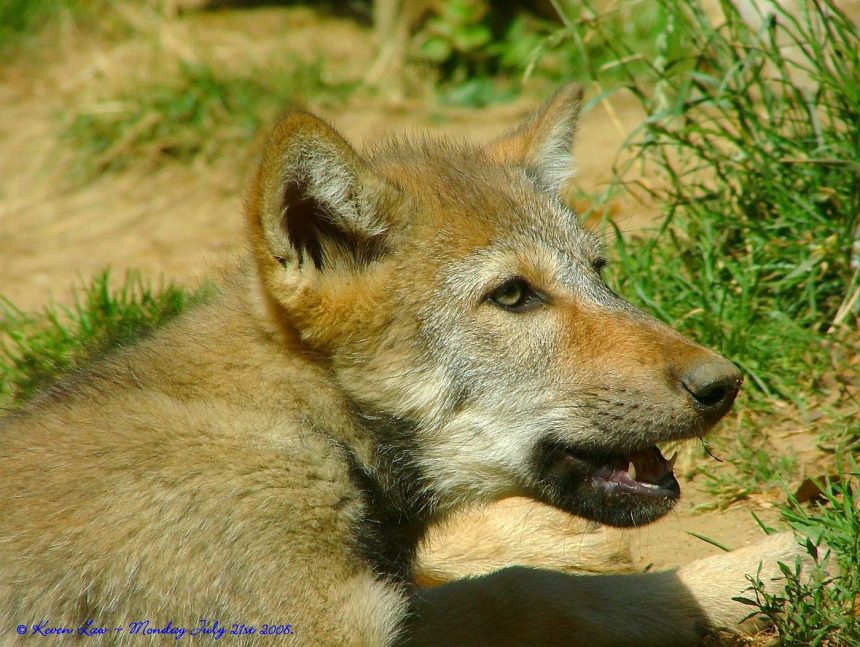
In April 2025, a Texas biotechnology company announced it had brought back the dire wolf, a predator extinct for about 13,000 years and made famous by the television series Game of Thrones. Colossal Biosciences unveiled three pups, two males named Romulus and Remus, born on 1 October 2024, and a female named Khaleesi, born on 30 January 2025. The company did not clone a preserved animal. Instead, scientists analysed ancient DNA from a 13,000-year-old tooth and a 72,000-year-old ear bone, identified about 20 genetic edits across 14 genes that distinguish dire wolves from grey wolves, and made those edits in grey wolf cells using CRISPR. Embryos were carried by surrogate dogs, and the pups now live on a 2,000-acre fenced preserve at an undisclosed location in the northern United States.
What the Evidence Shows
The announcement set off one of the fiercest debates in modern biology. Colossal calls the pups the first successfully de-extincted animal, but many scientists object that the animals are genetically engineered grey wolves, not true dire wolves, since the edits touch only a tiny fraction of the millions of genetic differences between the species. The company’s chief scientist later acknowledged that a perfect resurrection is impossible. Yet even the critics concede the technology matters: the same techniques could help save endangered species such as the red wolf, a critically endangered animal with fewer than two dozen left in the wild in North Carolina, by restoring lost genetic diversity. Colossal’s next targets are the woolly mammoth and the thylacine, the Tasmanian tiger, and the argument over what counts as bringing a species back is far from settled. Reporting and analysis from sources such as NASA track the same developments, and specialists following dire wolf de-extinction claim say the direction is now consistent across independent lines of evidence.
The Wider Context
Funding bodies are watching dire wolf de-extinction claim closely because the work sits at the junction of basic curiosity and practical return. Grant panels increasingly ask for a path from discovery to application, while researchers push back that the most valuable uses of fundamental science are rarely the ones written into the original proposal. The tension is productive when both sides stay honest about timescales.
What Happens Next
The long view on dire wolf de-extinction claim is that fields advance by accumulation rather than by single announcements. This result adds a solid, checkable piece to a structure many teams are building, and its authors have shared their data so the piece can be tested from every side. That is how the picture eventually becomes reliable enough to act on. You can follow related developments in our coverage of science.
It is also worth remembering how quickly the picture in this area has changed before. Positions that looked settled a few years ago have been revised as new data arrived, and the same humility is appropriate now. The strongest coverage of this subject, and the most useful advice, tends to come from sources that update their views openly when the facts move, rather than defending an earlier position long after it has stopped fitting the evidence available.