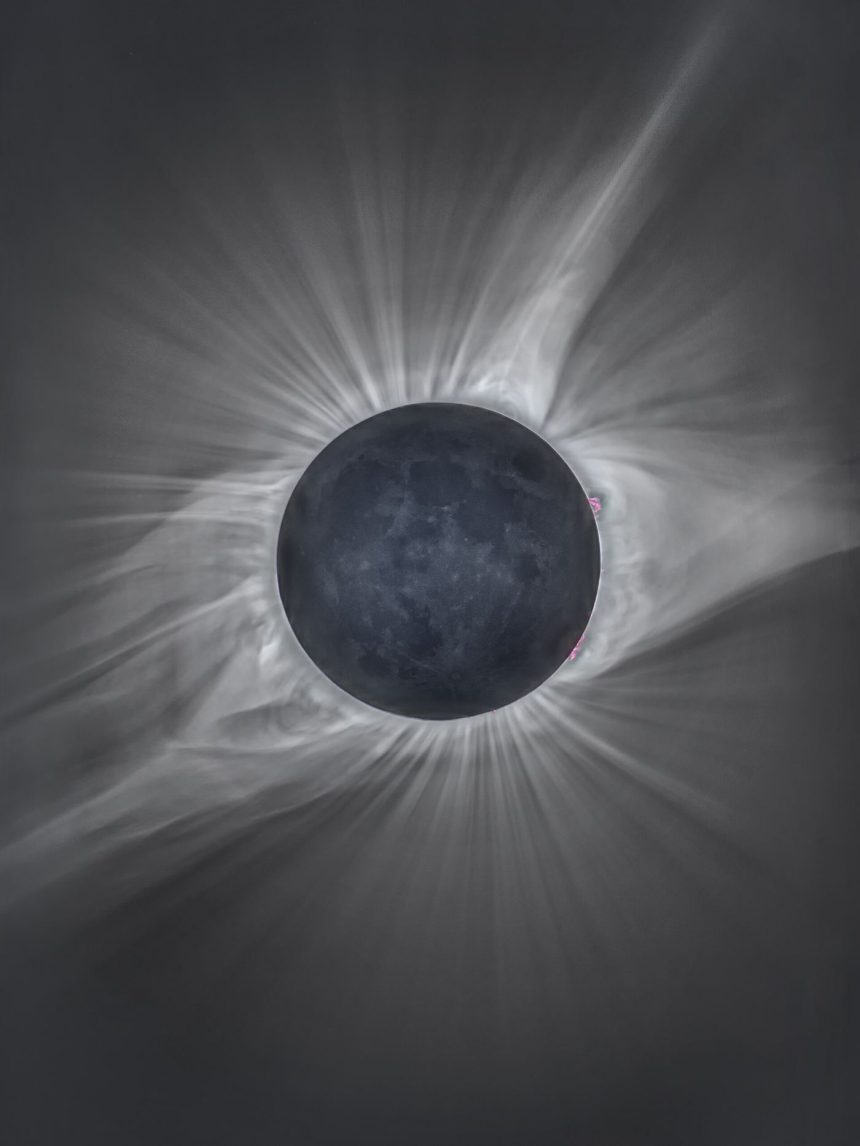
On Christmas Eve 2024, a spacecraft the size of a small car flew closer to the Sun than any human-made object in history. NASA’s Parker Solar Probe passed just 6.1 million kilometres from the Sun’s visible surface, about four percent of the distance between the Earth and the Sun, while travelling at roughly 692,000 kilometres per hour, making it the fastest object humans have ever built. The probe was out of radio contact at the time, flying on its own through plasma heated to more than a million degrees, protected by a carbon-composite heat shield about 11 centimetres thick. Launched in August 2018, Parker reached its record orbit after seven gravity assists from Venus, the last in November 2024, which tightened its path around the Sun. It first crossed into the Sun’s outer atmosphere, the corona, in April 2021.
What the Evidence Shows
Parker exists to answer a question that has puzzled scientists for decades: why is the corona, the Sun’s outer atmosphere, far hotter than the surface below it? The probe’s instruments sample the solar wind at its source, measuring magnetic fields, plasma and energetic particles as they stream outward, and the data are already reshaping ideas about how the wind is heated and accelerated. The findings matter on Earth too, because solar storms can disrupt satellites, power grids and radio communications, and better forecasts depend on understanding what happens close to the Sun. Each orbit takes about 88 days, and every pass returns the probe to the same record distance from the Sun. Parker has now made dozens of close passes and its mission has been extended into 2029, so the fastest spacecraft ever built still has years of diving left. Reporting and analysis from sources such as NASA track the same developments, and specialists following Parker Solar Probe record flyby say the direction is now consistent across independent lines of evidence.
The Wider Context
Funding bodies are watching Parker Solar Probe record flyby closely because the work sits at the junction of basic curiosity and practical return. Grant panels increasingly ask for a path from discovery to application, while researchers push back that the most valuable uses of fundamental science are rarely the ones written into the original proposal. The tension is productive when both sides stay honest about timescales.
What Happens Next
The long view on Parker Solar Probe record flyby is that fields advance by accumulation rather than by single announcements. This result adds a solid, checkable piece to a structure many teams are building, and its authors have shared their data so the piece can be tested from every side. That is how the picture eventually becomes reliable enough to act on. You can follow related developments in our coverage of science.
It is also worth remembering how quickly the picture in this area has changed before. Positions that looked settled a few years ago have been revised as new data arrived, and the same humility is appropriate now. The strongest coverage of this subject, and the most useful advice, tends to come from sources that update their views openly when the facts move, rather than defending an earlier position long after it has stopped fitting the evidence available.