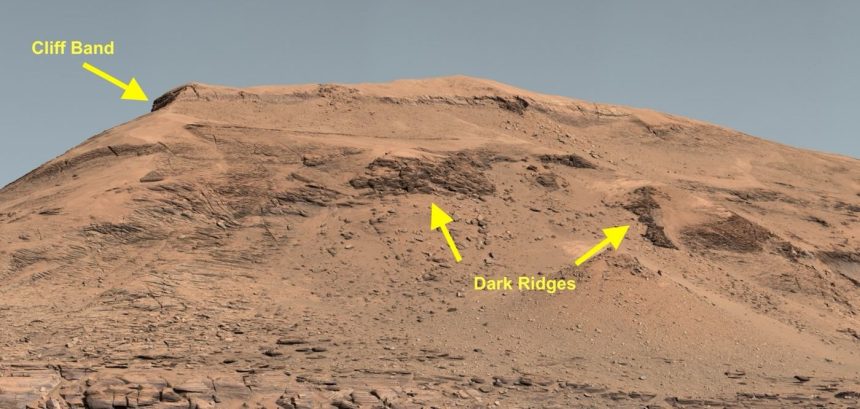
Small helicopter scouts, first proven by a technology demonstration on Mars, are changing how mission planners think about moving rovers across difficult terrain. A rover driving blind must choose routes from orbital images and its own short-range cameras, which can miss loose sand, sharp rocks and slopes hidden just beyond a ridge. A scout flying ahead can photograph the ground at rover scale, map hazards in three dimensions and identify scientifically interesting outcrops before the larger vehicle commits to a path. Engineers are now designing rotorcraft that are bigger, tougher and more autonomous than the first demonstrator, with better tolerance for cold nights, thin air and dust. Because the Martian atmosphere is so thin, rotors must spin fast and blades must be large for their weight, leaving little margin for extra instruments. Even so, a camera, a small weather package and a communications relay may be enough to transform operations. Teams on Earth could receive a scouted corridor each morning, compare several options and send the rover along the safest and most rewarding line. The concept also offers insurance: if a rover’s wheels degrade, aerial maps help planners avoid the terrain most likely to cause further damage on the long drive ahead.
What the Evidence Shows
Testing such scouts is unusually hard because no Earth facility reproduces thin Martian air, low gravity and remote operation together. Engineers therefore combine vacuum chambers, desert trials and high-fidelity simulation, then let flight software practise thousands of virtual landings on terrain generated from real Mars imagery. Autonomy is central, since radio delays mean a helicopter cannot be flown by joystick from Earth. It must judge wind gusts, keep track of its position without satellite navigation and choose a safe landing spot if conditions deteriorate. Scientists, meanwhile, are deciding what a scout should look for first: layered sediments that record ancient water, fresh impact craters that expose buried ice, or safe approaches to cliffs too risky for a rover to inspect closely. There are trade-offs in every design, because adding range and payload increases power demands in an environment where solar charging is slow. Even a short-lived scout, however, could pay for itself by preventing a single bad drive. As agencies plan more ambitious surface missions, including eventual sample collection and human precursor work, the partnership between a careful rover on the ground and an agile eye in the sky looks increasingly like the standard way to explore. Reporting and analysis from sources such as NASA track the same developments, and specialists following helicopter scouts for Mars rovers say the direction is now consistent across independent lines of evidence.
The Wider Context
Funding bodies are watching helicopter scouts for Mars rovers closely because the work sits at the junction of basic curiosity and practical return. Grant panels increasingly ask for a path from discovery to application, while researchers push back that the most valuable uses of fundamental science are rarely the ones written into the original proposal. The tension is productive when both sides stay honest about timescales.
What Happens Next
The long view on helicopter scouts for Mars rovers is that fields advance by accumulation rather than by single announcements. This result adds a solid, checkable piece to a structure many teams are building, and its authors have shared their data so the piece can be tested from every side. That is how the picture eventually becomes reliable enough to act on. You can follow related developments in our coverage of science.