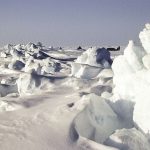
For many Arctic animals, sea ice is not scenery but infrastructure. Seals rest and raise pups on it, polar bears use it as a hunting platform, and walruses haul out on floes between feeding trips to the seabed. As the ice season shortens and the remaining ice grows thinner in many regions, ecologists are documenting how those routines shift. Bears may wait longer on shore for freeze-up, travelling farther and relying more on stored fat. Seals face a trade-off, because thin ice is easier to keep breathing holes open in, yet it breaks up sooner and offers less protection for pups. Researchers track these changes with satellite collars, aerial surveys, camera traps and the knowledge of Indigenous hunters who observe the same coasts across generations. The picture is not uniform. Conditions vary sharply between regions, and some populations adapt their timing or diet more readily than others. What concerns scientists is the pace of change relative to the lifespan of long-lived animals that reproduce slowly. Understanding exactly which behaviours are flexible, and which depend on ice being present at a particular place and week of the year, helps focus conservation where it can still make a difference.
What the Evidence Shows
Food webs complicate the story further, because ice also shapes what there is to eat. Algae growing on the underside of floes support small crustaceans, which feed fish, which in turn feed seals and bears. When ice forms late or melts early, that chain can fall out of step with the animals depending on it. At the same time, open water invites species from farther south, including new competitors and predators, into waters that were once reliably frozen. Scientists therefore monitor the whole system rather than any single charismatic species, pairing animal tracking with measurements of ice thickness, water temperature and prey abundance. Long-running study sites are especially valuable, since a single unusual winter proves little on its own. For northern communities, the research has immediate relevance, because the same ice conditions govern safe travel and subsistence hunting. The Arctic will not return quickly to its former state, so the practical task is to understand adaptation as it happens and to protect the refuges, migration routes and prey bases that give wildlife its best chance to adjust. Reporting and analysis from sources such as NASA track the same developments, and specialists following arctic ice and marine mammal hunting say the direction is now consistent across independent lines of evidence.
The Wider Context
Funding bodies are watching arctic ice and marine mammal hunting closely because the work sits at the junction of basic curiosity and practical return. Grant panels increasingly ask for a path from discovery to application, while researchers push back that the most valuable uses of fundamental science are rarely the ones written into the original proposal. The tension is productive when both sides stay honest about timescales.
What Happens Next
The long view on arctic ice and marine mammal hunting is that fields advance by accumulation rather than by single announcements. This result adds a solid, checkable piece to a structure many teams are building, and its authors have shared their data so the piece can be tested from every side. That is how the picture eventually becomes reliable enough to act on. You can follow related developments in our coverage of science.
It is also worth remembering how quickly the picture in this area has changed before. Positions that looked settled a few years ago have been revised as new data arrived, and the same humility is appropriate now. The strongest coverage of this subject, and the most useful advice, tends to come from sources that update their views openly when the facts move, rather than defending an earlier position long after it has stopped fitting the evidence available.