
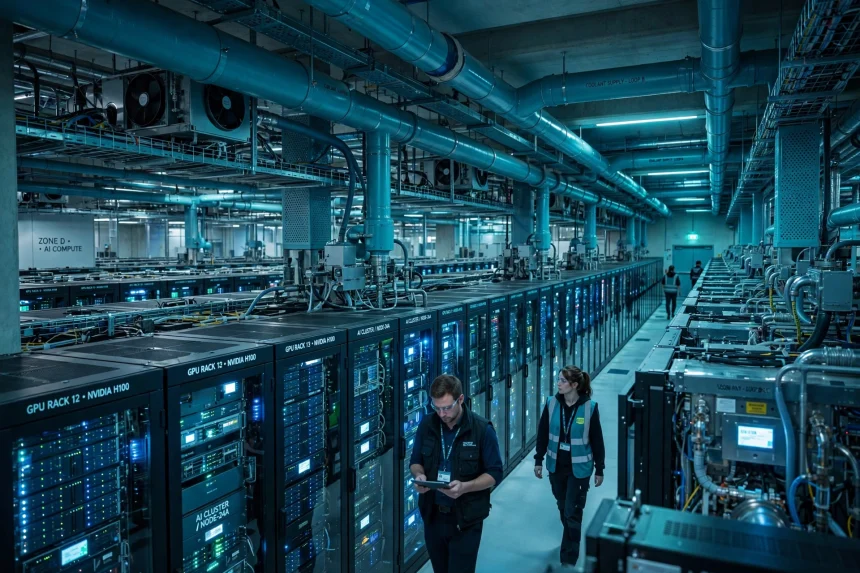
The artificial intelligence boom has a very physical price tag. Behind every chatbot answer and generated image sits a data centre — vast buildings filled with servers, cooling systems and power connections. This week, new analysis highlighted an uncomfortable gap: spending on AI infrastructure is forecast to outstrip the revenue the technology is expected to generate, prompting investors and executives to ask whether the maths still adds up.
Reporting by The Register summarised forecasts showing capital expenditure on chips, servers and buildings racing ahead of near-term AI income. Separate commentary has put the scale in striking terms, suggesting that paying for the current wave of data centres would require an implausibly large share of the workforce’s economic output. The exact figures can be debated; thedirection of travel is harder to dispute.
Why the Bills Are So Large
Modern AI models are trained and run on specialised processors that are expensive, power-hungry and quickly outdated. A single large facility can require hundreds of megawatts of electricity, new grid connections, and cooling on an industrial scale. Companies are also racing one another: nobody wants to be the firm that under-built if demand explodes, so each builds for the optimistic scenario at the same time.
That competitive logic explains the spending, but it does not guarantee returns. Revenue from AI subscriptions, advertising and business software is growing fast, yet it starts from a much smaller base than the investment now being committed. As we noted in our guide to how a strong website can support business growth, digital advantage comes from matching investment to real customer demand — not from spending the most in absolute terms.
What Could Go Wrong — and Right
Sceptics point to previous technology cycles. Fibre-optic networks were wildly overbuilt during the dot-com era, many investors lost money, yet the cheap bandwidth that resulted later powered streaming, cloud computing and social media. Data centres could follow a similar path: painful for some balance sheets, transformative for the wider economy.
There are also practical constraints. Power supplies, planning approvals and chip production cannot expand instantly, which may slow building and give revenue time to catch up. Efficiency is improving too — newer processors do more work per watt, and software techniques are reducing the computing needed for common tasks. Industry reporting from sources such as the BBC Technology section shows providers competing as much on efficiency and reliability now as on raw scale.
Governments are feeling the pressure as well. Regions competing to host new facilities must weigh jobs and tax income against strain on electricity networks, water supplies and housing for construction workers, while local residents increasingly ask who benefits from the power being consumed.
What It Means for Businesses and Users
For ordinary businesses, the lesson is not to build anything — it is to buy carefully. AI tools bought today are subsidised by investors betting on future growth; prices, features and even whole products may change when the economics tighten. Choosing tools with clear monthly value, exportable data and no long lock-in protects you whichever way the market turns. It is the same discipline described in our article on the psychology of discounts: a fashionable offer is not automatically a good deal.
For users, the building boom still brings benefits — faster services, more capable assistants and falling prices for basic AI features as capacity grows. The risk is consolidation: if only a handful of companies can afford the infrastructure, competition and choice may narrow over time.
The Bottom Line
AI data centre spending is not irrational, but it is running ahead of proven revenue, and the gap is now large enough to dominate earnings calls and analyst reports. Whether this becomes a bubble or simply an expensive foundation for the next decade of computing depends on how quickly real, paying demand catches up. For now, the smartest position for businesses and readers alike is enthusiasm with arithmetic: use the tools, enjoy the falling prices, and keep asking what each service actually earns its place in your budget.